

Quick Answer: What Does The Hermit Tarot Card Mean?
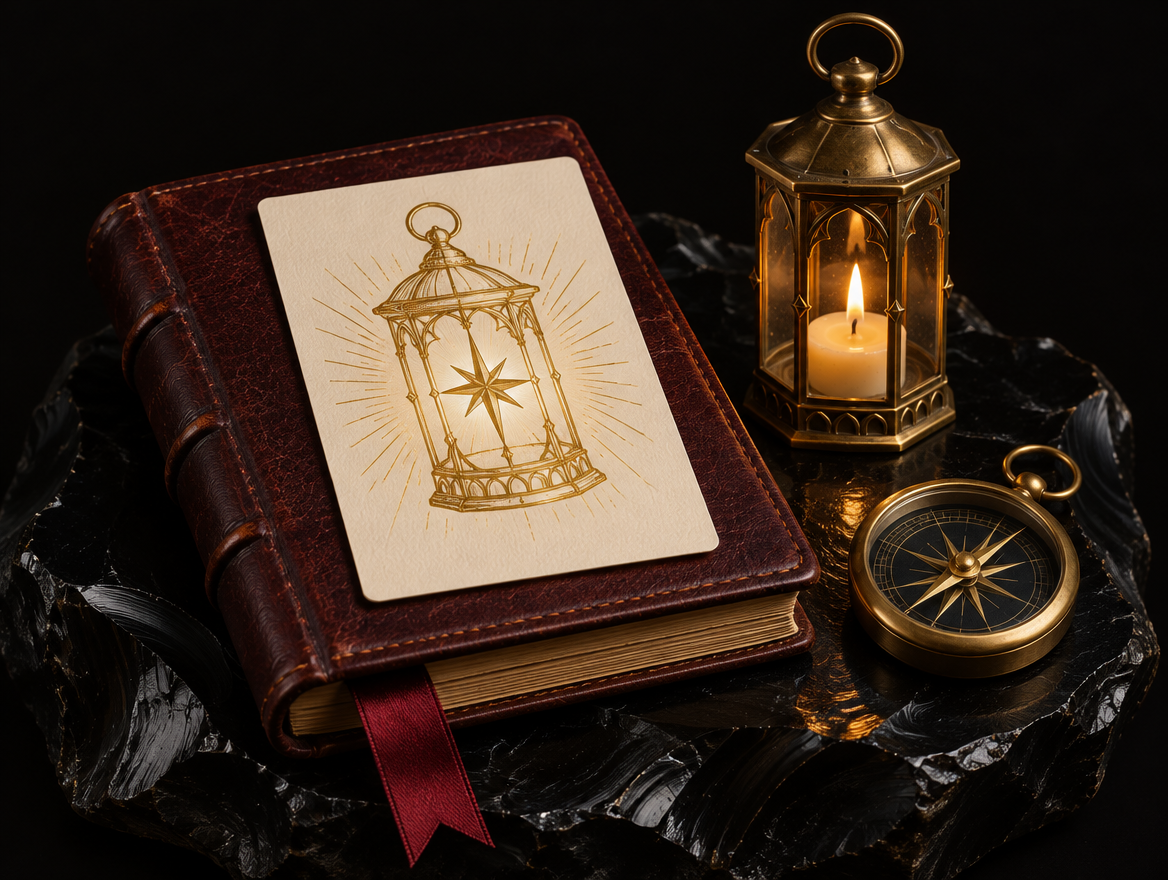
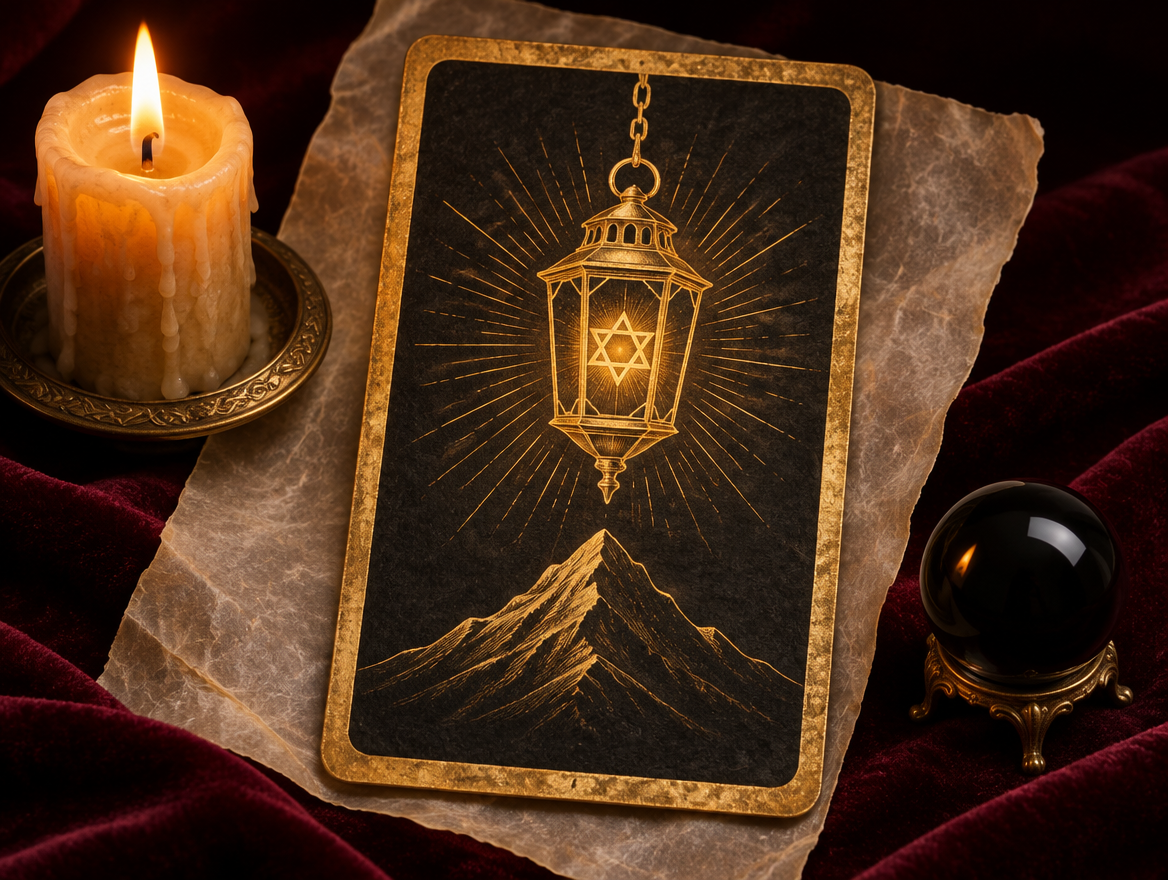
The Hermit is card IX (9) of the Major Arcana. On the traditional Rider–Waite–Smith card, a cloaked old figure stands alone on a high place, holding up a lantern with a star shining inside it and leaning on a staff. It’s the card of chosen solitude: stepping back from the noise so you can hear yourself think, and carrying your own light.
Keywords: solitude, reflection, inner guidance, wisdom, discernment, withdrawal, attainment.
- Upright, in one line: the card can point to time alone that clears your head, and to trusting the light you already carry.
- Reversed, in one line: readers often take it as solitude that has turned into hiding, or as a need for quiet you keep refusing yourself.
- Astrology link: in the Golden Dawn–derived correspondences The 9th King uses, The Hermit is paired with the zodiac sign Virgo and the Hebrew letter Yod.
On The 9th King, tarot is a mirror for self-knowledge, not fortune-telling. The Hermit doesn’t tell you to cut everyone off. It asks a sharper question: am I stepping back to find my light, or to make sure no one ever sees me?
Table of Contents

The Hermit tarot card at a glance
| The Hermit | |
|---|---|
| Number | IX (9), Major Arcana |
| Core theme | Chosen solitude and inner light |
| Upright | Reflection, discernment, guidance |
| Reversed | Isolation, avoidance, or refused rest |
| Correspondence (Golden Dawn–derived) | Virgo; Hebrew letter Yod |
| Golden Dawn title | The Magus of the Voice of Power, the Prophet of the Eternal |
| 9K tension | Chosen solitude vs hiding |
| Key question | Am I stepping back, or hiding? |
What’s on the card: The Hermit tarot symbolism, piece by piece
Most modern decks follow the Rider–Waite–Smith design, illustrated by Pamela Colman Smith to A. E. Waite’s instructions and first published by William Rider & Son in 1909 (Wikipedia: Rider–Waite Tarot). Waite explained the card himself in The Pictorial Key to the Tarot, now in the public domain (sacred-texts.com: Waite, The Hermit).
The lantern and the star
The lantern is the heart of the card. Waite is specific about it: what shines inside is a star, and the one change he made from the older designs was that the lamp is no longer half-hidden inside the bearer’s mantle (sacred-texts.com: Waite, The Hermit).
That small change matters: the light is held out in the open. On the 1909 Smith card, the star is drawn with six points (Wikipedia: The Hermit (tarot card)).
The cloaked old figure
The Hermit is an old figure in a long mantle. Waite says this figure blends two ideas: the Ancient of Days and the Light of the World, images drawn from biblical language for the eternal and for a guiding light (sacred-texts.com: Waite, The Hermit). On the 1909 Smith card, the figure has a long white beard and wears a grey, hooded cloak.
Readers often take the cloak as discretion (Wikipedia: The Hermit (tarot card)).
The staff
In the other hand, the Hermit carries a staff. Waite notes some writers called the staff a magic wand, a reading he thought missed the card’s higher meaning (sacred-texts.com: Waite, Part I, The Trumps Major). A simpler reading works well too: a staff is what you lean on when the path is steep and you’re walking it yourself.
The high place
Waite says the figure holds up his beacon on a height to show this is a card of attainment (sacred-texts.com: Waite, The Hermit). Wikipedia describes the scene as a mountain peak with a mountain range behind (Wikipedia: The Hermit (tarot card)).
The Hermit has already climbed. He isn’t lost.
Seeker or guide? Waite’s correction
Older writers described the Hermit as a sage searching for truth and justice. Waite disagreed. He called it a card of attainment rather than a card of quest, and said the beacon is a signal to others that they can reach the same height (sacred-texts.com: Waite, Part I, The Trumps Major). In his words, the light says: “where I am, you also may be” (sacred-texts.com: Waite, The Hermit).
He also pushed back on reading the card as occult isolation, a protective cutting-off from other people, which he traced to Éliphas Lévi (sacred-texts.com: Waite, The Hermit). Even Waite didn’t read The Hermit as walling yourself off.

The Hermit tarot meaning: upright and reversed
The Hermit upright
Upright, readers usually take The Hermit as a quiet, serious card. Common upright themes:
- Solitude: time alone that restores you rather than drains you.
- Reflection: stepping back to see a situation whole.
- Inner guidance: trusting what you know when the outside noise drops.
- Discernment: sorting what matters from what’s just loud.
- Wisdom shared: having climbed far enough that your light can help someone else.
The useful upright message isn’t “be alone forever.” It’s “go quiet long enough to find your own light, then hold it up.”
The Hermit reversed
Reversed, readers tend to go one of two ways. Your own situation usually tells you which one fits:
- Too much withdrawal. Solitude has turned into isolation. You’ve stopped returning calls, not because you need rest, but because being seen feels like too much.
- Too little solitude. You keep refusing yourself the quiet you need. You’re always available, always busy, and you can’t hear your own thoughts anymore.
What Waite’s 1911 list said
Waite’s divinatory list for The Hermit was surprisingly mixed. It opens with “Prudence, circumspection,” then adds darker words such as treason, dissimulation and corruption. Reversed, he gave concealment, disguise, fear and unreasoned caution (sacred-texts.com: Waite, Divinatory Meanings).
That’s the language of old fortune-telling. Britannica dates tarot to Italy in the 1430s, where the decks were invented for card games, and its adaptation for fortune-telling to France around 1780 (Britannica: Tarot). On The 9th King we turn Waite’s list into questions. Prudence becomes what deserves my careful attention? Concealment and unreasoned caution become what am I hiding from, and is the fear still current?

| Position | Common reading | Question to ask |
|---|---|---|
| Upright | Solitude that clears your head | What do I hear when it’s quiet? |
| Reversed (hidden) | Solitude turned into hiding | Who am I avoiding? |
| Reversed (refused) | No quiet, no inner voice | When was I last alone? |
| Waite, 1911 | Prudence; reversed, concealment and fear | What deserves care? |
| 9K question | Light kept covered | What am I hiding from? |
The Hermit and Virgo: the Golden Dawn correspondence
Which sign goes with The Hermit?
The astrology links on The 9th King are Golden Dawn–derived correspondences, the tradition The 9th King uses. Waite and Pamela Colman Smith were both members of the Hermetic Order of the Golden Dawn, and their deck reflects that background (Wikipedia: Rider–Waite Tarot).
In that system, the 22 Major Arcana are split among the elements, the planets and the zodiac signs. The Hermit is one of the zodiac cards. The Golden Dawn’s Book T, as printed in Liber LXXVIII, lists card 9, The Hermit, with the Hebrew letter Yod and the sign Virgo, and gives it the title The Magus of the Voice of Power, the Prophet of the Eternal (Liber LXXVIII, sacred-texts.com).
Other schools differ
Other traditions use different attributions, and not every card maps to a single sign (court cards and Pages work on a different scheme altogether). The Virgo pairing is a symbolic lens, not a law. If another system suits you, use it consistently.
What Virgo adds to the card
Our Virgo personality traits guide describes Virgo as an earth sign, mutable, and ruled by Mercury, the planet of thinking, language and skilled hands. Through that lens, The Hermit’s themes line up neatly:
- Discernment. Virgo sorts and refines. The Hermit steps away from the crowd to see what’s actually true.
- Service. The Hermit’s light is held up for others. Virgo’s best gift is useful help, offered well.
The same guide names Virgo’s shadow as harsh criticism and perfectionism. That fits The Hermit’s shadow too: the inner critic gets loud when you’re alone with it, and “I’ll come back when I’m ready” can quietly become “I’ll come back when I’m perfect.”
The Hermit card vs your Virgo placements
You don’t need to be a Virgo for this card to speak to you. If it keeps appearing, look at where Virgo falls in your chart; our guide on how to read a birth chart shows how to find it.
The Hermit’s place in the Major Arcana
After Strength, before the Wheel
In the Rider–Waite–Smith order, The Hermit (IX) comes after Strength (VIII) and before the Wheel of Fortune (X). Read as a sequence for self-knowledge, it’s a useful pattern. Strength is learning to work with your own instincts. The Hermit is taking that steadiness somewhere quiet to understand it. The Wheel is going back into a world that keeps turning, with what you learned.
| Card | Movement | What it asks |
|---|---|---|
| Strength (VIII) | Steadying yourself | Can I stay gentle and firm? |
| The Hermit (IX) | Stepping back to see | What do I know when it’s quiet? |
| Wheel of Fortune (X) | Returning to change | What will I bring back? |
The 9K reading: chosen solitude or hiding?
The tension: stepping back vs disappearing
The Hermit’s core tension is between chosen solitude and hiding. From the outside, they can look identical. Both mean fewer messages, fewer plans and more closed doors.
- Chosen solitude is time alone that you take toward something: clarity, rest, a decision, your own voice. You know roughly why you’re there, and you know the way back.
- Hiding is time alone that you take away from something: a conversation, a feeling, the risk of being known. The door stays shut because opening it feels dangerous.
Honestly, most solitude is a mix. The point isn’t to judge yourself; it’s to notice which one is driving this week.
The shadow side: when solitude becomes a wall
The shadow of The Hermit is the lantern pulled back inside the mantle. It shows up in a few familiar ways:
- Isolation as avoidance. Calling it “needing space” when it’s dodging a hard talk, a decision or a feeling.
- Quiet superiority. Feeling wiser or deeper than the people you’ve withdrawn from, so you never have to test your ideas against theirs.
- Never being seen. Staying so private that no one can know you well enough to disappoint you, or to love you.
- Endless preparation. Waiting to come back until you’ve figured everything out, which can mean never coming back.
If being visible once brought trouble, hiding made sense then. The work now is to choose solitude on purpose, instead of letting old fear choose it for you. Our plain-language guide to shadow work is a good place to start, and if you notice that the “shallow” people you avoid seem to carry traits you dislike in yourself, our guide to psychological projection is worth a read.
Privacy without mixed signals
Taking space is healthy. Trouble starts when others have to guess what your silence means. As our guide to privacy without mixed signals puts it, privacy is being open that you’re stepping back; secrecy leaves people in the dark. A Hermit who says “I need a quiet week, it’s not about you, I’ll call Sunday” is still holding the lantern up.
The self-mastery lesson: carry your own light, and let it be seen
The self-mastery lesson of The Hermit is simple: you can find your own light in the quiet, and you don’t have to hide it once you have.
Self-mastery here means three things:
- Go quiet on purpose. Know what you’re stepping back to look at.
- Trust what you find. Your own judgment counts, even without a crowd agreeing.
- Come back down. Share some of what you learned with at least one person, so solitude stays a lantern and not a wall.
Waite noted that the Hermit’s solitary path, walked by his own lamp, offers counsel about prudence (sacred-texts.com: Waite, Part I, The Trumps Major). Careful, yes. Cut off, no.
The Hermit tarot card in love, work and self-growth
These are reflections, not predictions. The Hermit points at solitude, inner guidance and how much of yourself you let others reach.
The Hermit in love
In love readings, The Hermit often points to needing space to know your own mind, or to a stretch of time where you’re happier alone than in company. It can also point to how much you let a partner in.
Questions worth asking:
- Do I take space to recharge, or to avoid something I need to say?
- Does the person I’m with know when I’m stepping back, and why?
The Hermit doesn’t tell you to stay or leave, or to be single or partnered. It invites honesty about what your solitude is for.
The Hermit at work
At work, The Hermit can point to deep, focused work that needs a closed door. It can also point to the habit of disappearing into work so you never have to ask for help or share credit.
A grounded approach when The Hermit shows up around work:
- Block one stretch of quiet, uninterrupted time this week for the task that needs it most.
- Then share one finding or draft with one colleague before it feels “finished.”
Nothing here is career or financial advice. For money or contract decisions, talk to a qualified professional.
A practical exercise: the Lantern Check
This takes about fifteen minutes, once a week, for a month. You need a notebook and, if you like, The Hermit card in front of you (pull it on purpose; no random draw needed).
The steps
- Name the step back. Write down one way you’ve pulled away recently: a skipped plan, an unanswered message, a quiet weekend.
- Toward or away. Ask: was I stepping toward something (rest, clarity, my own voice) or away from something (a person, a feeling, being seen)? Write one honest sentence. It can be both.
- Find the light. Write one thing you understand now that you didn’t before the quiet. If nothing yet, write what you’re still trying to see.
- Signal the way back, if it’s safe and useful. If someone has been affected by your quiet and reaching out feels safe and helpful, send one short, honest message: what you need, as much of the real reason as you choose to share, and whether or when you’ll be in touch. If contact isn’t safe or wanted, skip this step; the quiet can stay yours.
- Share one gleam. Before the week ends, tell one safe person one thing you learned in your solitude.
Worked example (fictional)
Dana (fictional) has gone quiet for two weeks. Her step back: she’s skipped two dinners with friends and left a group chat on mute. Toward or away? She writes: “Both. I needed rest, and I also didn’t want to answer questions about the job I didn’t get.”
Her light: “I don’t actually want that kind of job. I wanted the title.” Her signal, since her friends are safe and she misses them: a message to her closest friend saying she’s been in a quiet patch after the job news and she’ll be at the next dinner.
Her gleam: at that dinner, she tells one friend what she realized. Coming back felt lighter than staying gone.
Using the exercise in a reading
If The Hermit comes up in a spread, run the Lantern Check for the area of life you asked about. Our shadow work tarot spread pairs well with it. If you’d rather read by feel than by the book, Code of Ascension’s guide to intuitive tarot (Code of Ascension) is a good companion.

Journal prompts for The Hermit
Use one prompt per session, for ten minutes, somewhere quiet.
- When does being alone restore me, and when does it start to feel like hiding?
- What do I know about my life that I only hear when the noise stops?
- Who would I avoid if I could, and what conversation am I avoiding with them?
- Where do I feel quietly superior to people, and what would happen if I let them in?
- What would “ready” actually look like, and am I using it as a reason to stay away?
- When did being seen first feel risky, and is it still risky now?
- What have I learned in solitude that someone I trust might need to hear?
For more prompts on withdrawal and the hidden self, see our full list of shadow work prompts, and our zodiac shadow work guide if you want to explore how the pull toward isolation plays out through your signs.
A gentle note: this is reflective practice, not therapy. If you’re dealing with trauma, abuse, thoughts of self-harm or distress that feels overwhelming, please work with a qualified therapist who can support you properly. And it’s always fine to stop a prompt that feels like too much.
Myths and misreadings about The Hermit
- “The Hermit means you’ll end up alone.” On The 9th King, no card predicts outcomes. The Hermit points to solitude you can choose and shape, not a sentence.
- “The Hermit is about cutting people off.” Waite himself rejected the reading of the card as protective isolation. The light is held up to be seen.
- “The Hermit is a lost seeker.” Waite called it a card of attainment rather than quest. The Hermit has climbed; he isn’t wandering.
- “The Hermit reversed is a bad omen.” Readers usually take it as solitude that has slid into hiding, or quiet you keep refusing yourself. Both are workable.
The Hermit Tarot Card: FAQ
What does The Hermit tarot card mean?
The Hermit tarot card, Major Arcana IX, is commonly read as solitude, reflection, inner guidance and discernment. The traditional card shows a cloaked old figure on a high place, holding a lantern with a star inside and leaning on a staff. On The 9th King it’s read as a mirror, not a prediction: it invites you to step back long enough to find your own light, and then to let that light be seen.
What does The Hermit reversed mean?
Readers usually take The Hermit reversed in one of two ways. Either solitude has turned into isolation, where you’re hiding from people or feelings rather than resting, or you’re refusing yourself the quiet you need and can’t hear your own thoughts. Waite’s reversed list included concealment, fear and unreasoned caution. Treat the card as a question about what your solitude is for, not as a warning.
What zodiac sign is The Hermit tarot card?
In the Golden Dawn–derived correspondences The 9th King uses, The Hermit is paired with Virgo and the Hebrew letter Yod. Its Golden Dawn title, as printed in Liber LXXVIII, is The Magus of the Voice of Power, the Prophet of the Eternal. Virgo’s discernment and quiet competence echo the card’s themes. Other tarot schools use different attributions, so treat the pairing as a symbolic lens rather than a rule.
What does The Hermit tarot card mean in love?
In love, The Hermit often points to needing space to know your own mind, or to a time when you feel more at home alone. It can also ask how much you let a partner reach you, and whether your distance is rest or avoidance. It doesn’t tell you to stay, leave or stay single. It invites you to be clear with yourself and others about what your solitude is for.
Is The Hermit a yes or no card?
The 9th King doesn’t use tarot for yes or no answers. Some readers call The Hermit a “maybe” or “not yet” card, but treating it that way skips the useful part. A better approach is to ask what you’d understand if you stepped back from the situation for a while, what your inner guidance already says, and whether you’re pausing to think or pausing to hide.
What does the lantern on The Hermit card mean?
Waite says the lantern holds a star and, unlike on older cards, isn’t half-covered by the Hermit’s mantle. He reads the raised light as a beacon telling others they can reach the same height. Many readers take the lantern as inner wisdom or truth. On The 9th King, it’s the card’s central image: your own light, found in quiet, and held where others can see it.
Is The Hermit a lonely card?
Not necessarily. The Hermit is usually read as chosen solitude, which can feel peaceful and clarifying rather than lonely. It can turn lonely when solitude becomes a way to avoid people or avoid being seen. Waite rejected reading the card as protective isolation and stressed the beacon held up for others. The useful question is whether your time alone is bringing you closer to yourself, or further from everyone else.
Your next step: run the Lantern Check this week with one recent step back, and send the one honest message it asks for. Then read our guide to privacy without mixed signals to learn how to take space without leaving people guessing.
Explore Next
- Taking space without confusion: Privacy Without Mixed Signals
- The sign paired with this card: Virgo Personality Traits
- Meeting your shadow plainly: Shadow Work, Plainly
- The card after this one: Wheel of Fortune Tarot Card
- Another Major Arcana guide: The Sun Tarot Card
- New to the deck: Tarot for Beginners: How Tarot Really Works (Code of Ascension)
- More tarot on The 9th King: Tarot Card Meanings · Major Arcana · Tarot & the Zodiac · Shadow Work Tarot Spread
- More Major Arcana: Strength · The Hanged Man · The Star · The High Priestess

Final Thought: Find Your Light, Then Hold It Up
The Hermit climbs alone, but he doesn’t hide the lamp. He stands where the view is clear and holds his light where others can see it. Go quiet when you need to, trust what you find there, and then come back down with something to share. Know your nature. Rule your life.
About the Author
King is the founder of The 9th King, where zodiac psychology, relationships and shadow work are explored as tools for self-knowledge rather than fortune-telling. He’s a Libra Sun, and writes about the personal side of astrology on King The Kemist. Astrology on The 9th King is interpretation and self-reflection, not prediction or established fact.
Leave a Reply