
Quick Answer: What Does the Nine of Pentacles Mean?
The Nine of Pentacles (also written 9 of Pentacles) is a Minor Arcana card from Pentacles, the earth suit of work, money, body and home. In the traditional image, a woman with a bird on her wrist stands among grapevines in the garden of a large house. On The 9th King, it’s the card of the tended garden: discernment, self-possession, and the quiet pleasure of what you’ve grown.
- Keywords: prudence, discernment, self-reliance, accomplishment, safety, enjoying what you’ve tended, good judgment, self-possession.
- Upright, in one line: a prompt to notice what you’ve built and how you look after it, if you want your independence to feel like a home rather than a fortress.
- Reversed, in one line: broken trust, a plan that went hollow, or self-reliance turned into isolation; a prompt to check where you’ve stopped letting anyone in.
On The 9th King, tarot is a mirror for self-knowledge, not fortune-telling. The Nine of Pentacles doesn’t say money or comfort is on its way. It asks how you care for what’s already yours, including yourself.
Table of Contents

The Nine of Pentacles at a glance
| Nine of Pentacles | |
|---|---|
| Arcana | Minor Arcana, a pip (number) card |
| Suit and element | Pentacles, linked with earth |
| Number | Nine |
| Golden Dawn title | Lord of Material Gain |
| Astrology (Golden Dawn) | Venus in Virgo |
| Upright | Prudence, safety, discernment |
| Reversed | Deception, bad faith, voided plans |
| Key question | Is this a home or a wall? |
What the Nine of Pentacles looks like
Most people know this card from the Rider–Waite–Smith deck, first published by William Rider & Son in 1909. It was illustrated by Pamela Colman Smith from the instructions of A.E. Waite, and both were members of the Hermetic Order of the Golden Dawn (Wikipedia: Rider–Waite Tarot).
Waite’s description in The Pictorial Key to the Tarot is only three sentences (sacred-texts.com: Waite, Nine of Pentacles), so this section stays close to them.
The woman and the bird
Waite describes a woman standing with a bird upon her wrist. She isn’t working or rushing. On The 9th King, the bird is a picture of something wild that has chosen to stay: trust that was earned, not caught.
The vines and the manor garden
She stands among a great abundance of grapevines in the garden of a manorial house. Waite calls it a wide domain that suggests plenty in all things. On The 9th King, we read the vineyard as patience made visible: years of tending and pruning.
“Possibly it is her own”
Waite hedges on one point. “Possibly it is her own possession and testifies to material well-being,” he writes (sacred-texts.com: Waite, Nine of Pentacles). That “possibly” matters. The card doesn’t say how she came to stand there: by work, by inheritance, by luck, or by some mix. On The 9th King, we take that as a reminder that the card’s steadiness lives in how she holds herself, not in the deed to the house.
On the early Smith card
A scan of the Nine of Pentacles from an original 1909 printing of the deck is on Wikimedia Commons, where it’s credited to Pamela Colman Smith (Wikimedia Commons: 1909 Nine of Pentacles scan). This page describes the card from Waite’s words only, so any detail you see on the scan beyond the woman, the bird, the grapevines and the manor garden isn’t in Waite’s text.

The Golden Dawn version of the card
The Golden Dawn’s teaching text on the tarot, Book T, as printed by Aleister Crowley in Liber LXXVIII, describes a different design: a white radiating angelic hand holds a rose branch with nine white roses, each touching a pentacle, with rosebuds on the branches as well as flowers, and the symbols of Venus and Virgo above and below (Liber LXXVIII, sacred-texts.com). There’s no woman and no garden.
Nine of Pentacles meaning (upright)
Waite’s upright meanings are a tidy list: prudence, safety, success, accomplishment, certitude and discernment (sacred-texts.com: Waite, Nine of Pentacles).
Book T is more material. Under the title Lord of Material Gain, it opens with “complete realization of material gain” and lists good, riches and inheritance, then adds harder words: covetousness, treasuring of goods, and sometimes dishonest dealing. It says the whole depends on the card’s dignity (Liber LXXVIII, sacred-texts.com). Liber explains dignity on the same page: a card is read as strong or weak, well or ill dignified, according to the cards next to it.
On The 9th King, we read the upright card as self-possession: being at home in your own life. It has three layers.
Discernment
Waite’s last upright word is discernment, and on The 9th King it’s the heart of the card. The card can point to a season where experience has trained your judgment: you can tell a good offer from a flattering one. Ask yourself: Where has my judgment grown sharper, and do I trust it yet?
Standing on your own
The card can point to a time when you can meet your own needs in some area: a skill you can rely on, a routine that holds, a space that’s yours to arrange. Self-reliance here isn’t a bank balance. Ask yourself: What can I count on myself for now that I couldn’t before?
Enjoying what you’ve tended
The woman isn’t counting her pentacles. She’s in the garden. The upright card can point to permission to enjoy what you’ve grown, whether that’s a home, a body you’ve cared for, a craft or a hard-won peace. Ask yourself: What have I built that I haven’t let myself enjoy?
Nine of Pentacles reversed
Some readers read reversals as the opposite meaning, some as blocked energy, and some don’t use them. Waite’s reversed meanings are sharp: roguery, deception, voided project, bad faith (sacred-texts.com: Waite, Nine of Pentacles). A “voided project” is a plan that came to nothing.
In his additional meanings, Waite gives the upright card as “prompt fulfilment of what is presaged by neighbouring cards,” and the reversed card as vain hopes (sacred-texts.com: Waite, Additional Meanings of the Lesser Arcana). He notes on that page that these extra meanings are very often in disagreement with the ones given earlier.
A card can’t tell you that anyone is deceiving you, and it can’t name anyone as dishonest. On The 9th King, the reversed card points to three patterns worth checking, offered as questions, not predictions.
When trust was broken
The reversed card can point to a time when an agreement didn’t hold, or when someone’s words and actions didn’t match. Look at behavior: what was promised and what was done. Ask yourself: What do I actually know here, and what am I filling in?
The plan that went hollow
The reversed card can point to a project that looked solid and then emptied out. That isn’t a verdict on your worth. Ask yourself: What did this plan teach me about what I truly want?
Self-reliance turned into a wall
On The 9th King, we often read the reversal this way. The garden becomes a fortress: “I don’t need anyone” stops being freedom and starts being armor. Needing help isn’t failure; it’s part of being a person. Ask yourself: Is my independence something I choose, or something I’m hiding behind?
| Pattern | Upright tone | Reversed tone |
|---|---|---|
| Judgment | Discerning, earned | Doubted, or second-guessed |
| Trust | Given with care | Broken, or never offered |
| Plans | Patient, well tended | Hollow, or abandoned |
| Independence | A home you live in | A wall you hide behind |
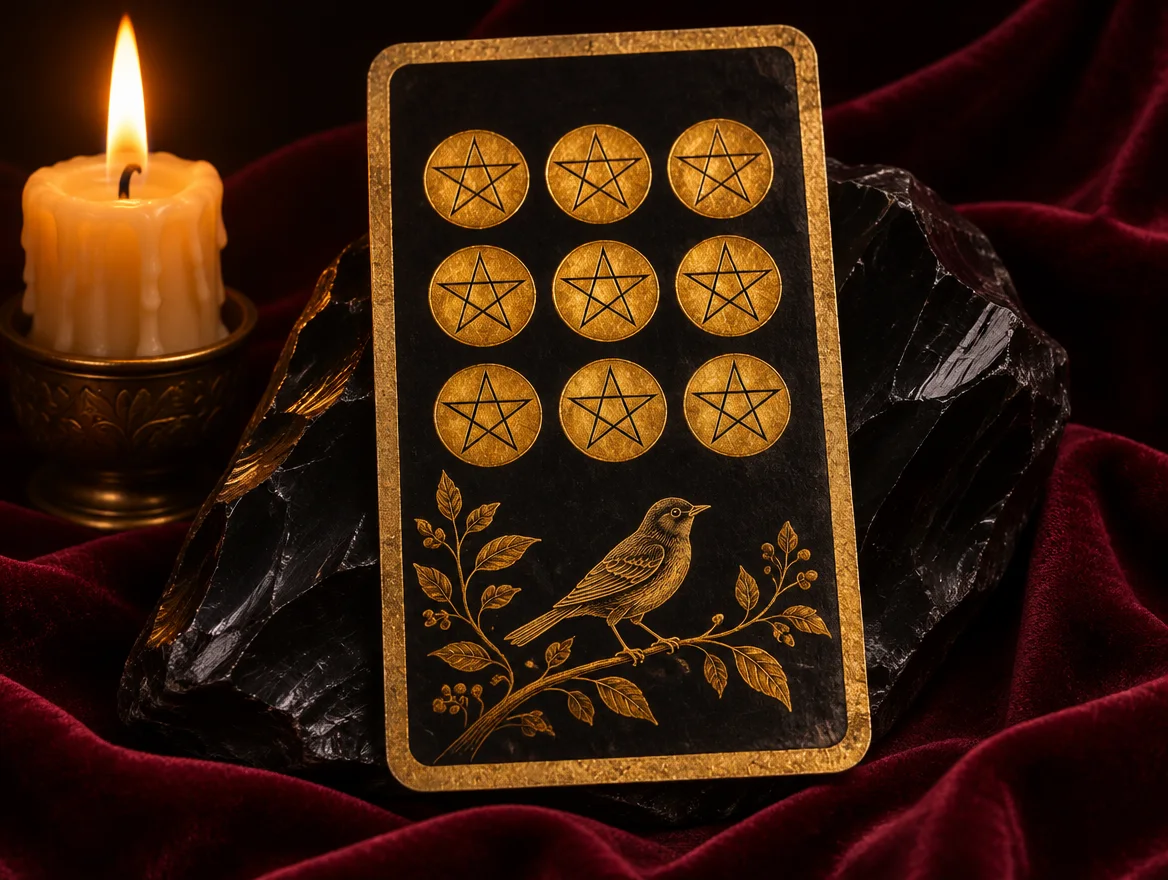
Nine of Pentacles astrology: Venus in Virgo
The 9th King uses Golden Dawn–derived correspondences, the tradition the Rider–Waite–Smith deck draws on. Other schools use different systems, and not every card maps to a single sign: the court cards and Pages are handled differently. This is one traditional framework, offered as symbolism.
How the number cards get their planets
In the Golden Dawn system, the 36 small cards (Twos through Tens) are matched to the 36 decans of the zodiac: ten-degree thirds of a sign, each given a planet. Book T‘s table lists the Nine of Pentacles, Material Gain, under Venus in Virgo (Liber LXXVIII, sacred-texts.com), and the card’s own entry places the symbols of Venus and Virgo above and below. In that table it sits directly between the Eight of Pentacles (Sun in Virgo) and the Ten of Pentacles (Mercury in Virgo). Liber’s separate table of central decans also lists it as the central decan of Virgo. Liber prints no degrees for it.
Book T places all four Nines in Yesod, one of the spheres of the Kabbalistic Tree of Life, and for this card it adds a short gloss: inheritance and much increase of goods.
What Venus brings
In astrology, Venus is associated with beauty, affection, pleasure, comfort and ease, and it traditionally rules Taurus and Libra (Wikipedia: Venus in astrology). See Taurus Personality Traits and Libra Traits for Venus at home. On this card, Venus is the part of you that wants to enjoy the garden, not just maintain it. For how Venus differs from your emotional needs, see Moon vs Venus.
What Virgo brings
Virgo is a mutable earth sign, ruled by Mercury (Wikipedia: Virgo in astrology). Our Virgo Personality Traits page covers its care for detail and its critical shadow. On this card, Virgo is the pruning: the small daily choices that keep a vineyard healthy.
The tension in the pairing
Venus wants to savor. Virgo wants to refine. The card sits where the two meet: pleasure that’s earned by care, and care that knows when to stop. At its best, Venus reminds Virgo that the work was meant to be lived in. On The 9th King, we also read a risk in the pairing: enjoyment that keeps waiting for everything to be perfect first.
The 9K reading: home or wall?
The card’s tension
The Nine of Pentacles holds two true things at once: you can stand on your own and you don’t have to stand alone. The card never tells us whether the woman is lonely or at peace. That’s the question it hands to you.
The shadow side
The shadow of the Nine of Pentacles is making self-sufficiency the measure of your worth. It can look like:
- Refusing all help. Treating any need as weakness, so you carry everything yourself.
- Worth on the balance sheet. Measuring yourself, or other people, by what they own or earn.
- The perfect garden. Waiting until everything is in order before you let yourself enjoy anything.
- Guarding instead of living. Spending so much energy protecting what you have that you stop using it.
These patterns are often learned early. If that rings true, inner child work is a gentle, related place to look.
Independence isn’t a bank balance
On The 9th King, independence is about choice and self-trust, not money. Someone who rents a small room, lives with a disability, depends on care, or is between jobs can be deeply self-possessed. The pentacles are symbols, not a price tag.
A card can’t measure your life, so The 9th King looks at what you can observe: what you do when you need something, and what you do when someone offers.
| Self-possession | Isolation |
|---|---|
| You ask for help when you need it | You hide needs until they become a crisis |
| You can accept an offer, or decline it kindly | You refuse every offer on principle |
| You enjoy what you have now | You put enjoyment off until things are perfect |
| You make choices from your own judgment | You make choices to avoid ever depending on anyone |
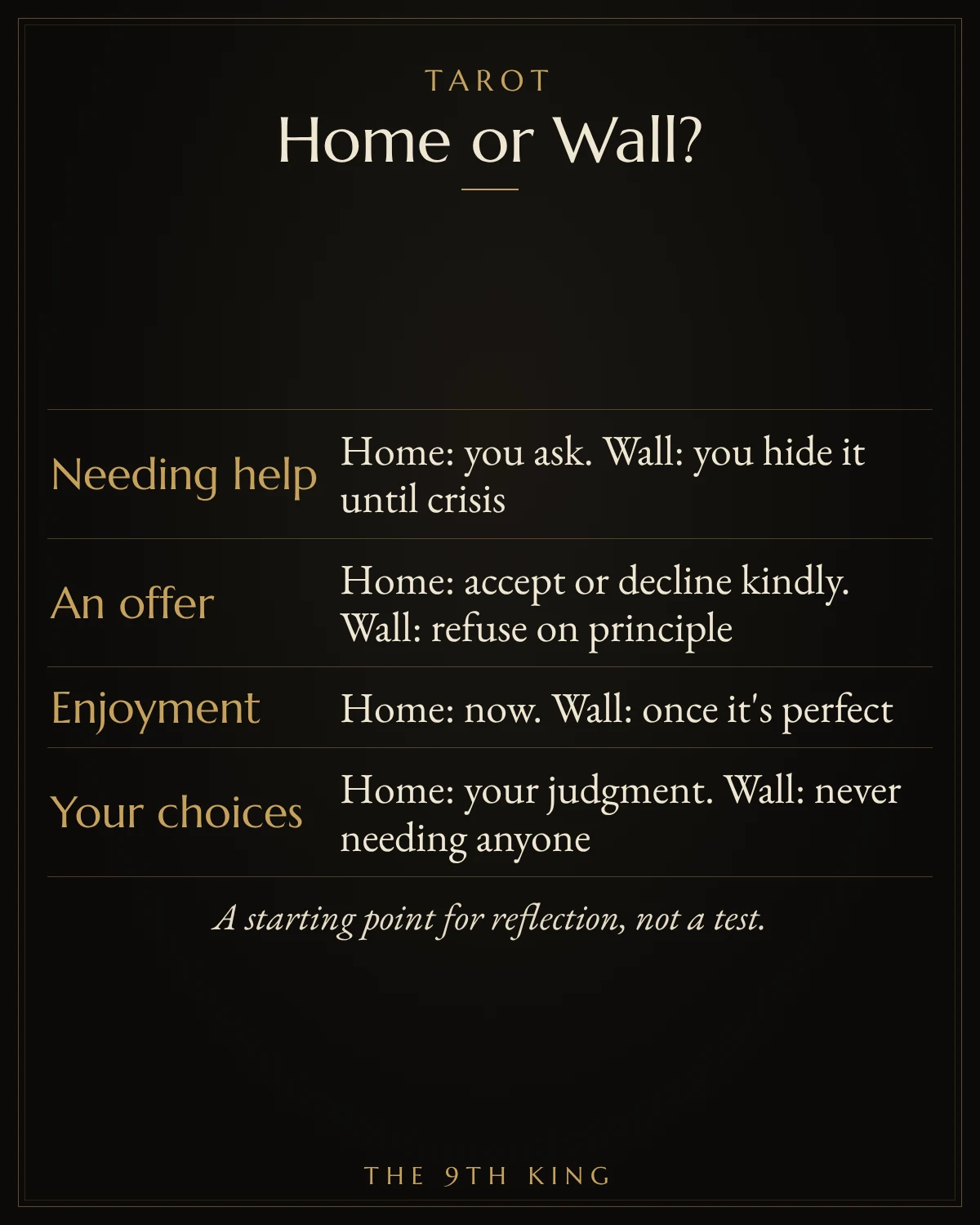
These are starting points for reflection, not a test. Real limits, inside or outside you, from illness and exhaustion to grief or money pressure, change what independence looks like. That’s not a failure of character.
The self-mastery lesson
The lesson of the Nine of Pentacles is to be at home in yourself without locking the gate. You can trust your judgment, care for what you’ve grown, and enjoy it now. And you can let someone help you, keep you company, or share the garden, without losing any of that.
Nine of Pentacles as feelings, in love and at work
Nine of Pentacles as feelings
As feelings, readers often take the card as contentment and self-respect: someone at ease with themselves, or proud of what they’ve built. A card can’t tell you what another person feels or will do; their words and actions can. About your own feelings, ask: Do I feel settled in my life right now, or settled only as long as nobody gets too close?
Nine of Pentacles love meaning
In a love reading, the upright card can point to a relationship where both people stay whole: each has their own interests, friends and judgment, and chooses to share them. The reversed card can point to keeping someone at arm’s length, or to an imbalance where one person’s independence leaves the other feeling shut out.
Tarot can’t tell you whether to stay or leave, and this page won’t either. Useful questions:
- What do I keep to myself in this relationship, and is that privacy or distance?
- When did I last let my partner, or a friend, help me with something real?
Privacy is healthy, and you don’t owe anyone a full account of your inner life. Our piece on privacy without mixed signals looks at keeping your own space while staying clear with the people close to you.
Nine of Pentacles at work and with money
None of this is financial or career advice, only reflection.
At work, readers often take the card as matured skill. Ask yourself: Where do I trust my own judgment at work, and where am I still asking permission I don’t need?
With money, the lesson is about your relationship to what you have, not the amount. Ask: Does what I have, large or small, bring me any ease? And is my sense of worth tied to it? For actual decisions, talk to a qualified professional.
The Ace of Pentacles is where the earth suit begins, and the Queen of Pentacles shows another kind of earthy care, one turned outward toward others. For holding on too tightly, see the Four of Pentacles.
Practical exercise: the garden walk
Look at your life as if it were a garden. You need about twenty minutes and a notebook.

Step 1: What’s growing
Write down what you’ve built or tended over time. A skill, a home, your health, a friendship, a craft. Don’t rank them.
Step 2: What you tend
Next to each item, write the care that keeps it going: a routine, a habit, a boundary, a regular check-in.
Step 3: What you enjoy
Mark each item you actually let yourself enjoy now, not someday. Leave the others unmarked.
Step 4: Where’s the gate
For each item, ask: Who can come into this part of my life, and how? Note anything you’ve closed off completely. Closing something off can be wise; notice whether you chose it.
Step 5: Open one gate
Choose one small way to let help or company into one area: asking a question, accepting an offer, inviting someone over. If it involves another person, that’s your choice, and only if it feels safe and useful.
A worked example (fictional)
Renée (fictional) draws the Nine of Pentacles reversed after a stretch of doing everything herself, and walks through her garden.
Under “what’s growing,” she lists four things: her pottery, her small apartment, her morning walks, and her friendship with her neighbor Joan. The care behind them: weekly studio time, a Sunday tidy, walking before work, and a monthly coffee with Joan.
She marks only two of the four as things she enjoys right now: the morning walks and the coffees with Joan. Her pottery has become a chore she keeps “improving,” and her apartment feels like a project she never finishes.
At the gate, she notices she’s never let anyone see her pottery. Her one open gate: she’ll ask Joan whether she’d like to come to the studio once. If Joan says no, that’s fine too; the point is that Renée asked.
Journal prompts for the Nine of Pentacles
- What have I grown in my life that I rarely give myself credit for?
- Where do I trust my own judgment, and where do I still doubt it?
- What would I enjoy now if I stopped waiting for it to be perfect?
- When did I last ask for help? What made it easy or hard?
- Is there a part of my life I’ve walled off? Did I choose that, or did it just happen?
For more, our shadow work prompts go deeper, and Shadow Work, Plainly explains how to start safely.
A warm note: this is reflective practice, not therapy. If you’re dealing with trauma, abuse, thoughts of self-harm or distress that feels overwhelming, please work with a qualified therapist who can walk with you. It’s always fine to stop a prompt that feels like too much.
Myths and misreadings of the Nine of Pentacles
- “The Nine of Pentacles means money is coming.” No. On The 9th King, tarot doesn’t predict outcomes. The card is a mirror for how you care for what you have and how you hold yourself.
- “It’s the card of being rich.” Waite says only that the garden is possibly hers. The card’s steadiness lives in discernment and self-respect, which don’t depend on wealth.
- “Independent people don’t need anyone.” Everyone needs other people at some point. Asking for help is part of self-reliance, not the opposite of it.
- “Venus in Virgo means this card is about Virgo people.” No. The correspondence describes the card’s symbolism in the Golden Dawn tradition. Anyone can draw it, whatever their sign.
Nine of Pentacles: FAQ
What does the Nine of Pentacles mean?
The Nine of Pentacles is a Minor Arcana card in the earth suit. Waite describes a woman with a bird on her wrist among grapevines in a manor garden, and gives upright meanings of prudence, safety, success, accomplishment, certitude and discernment. On The 9th King, it’s a mirror for self-possession: how you trust your judgment and enjoy what you’ve tended, not a prediction of wealth.
What does the Nine of Pentacles reversed mean?
Reversed, Waite lists roguery, deception, voided project and bad faith. Readers often take it as broken trust, a plan that came to nothing, or independence that has hardened into isolation. Some readers don’t use reversals at all. On The 9th King, treat it as a prompt to look at what you actually know, and at where you may have stopped letting anyone help.
What does the Nine of Pentacles mean as feelings?
As feelings, readers often take the Nine of Pentacles as contentment and self-respect: someone at ease in their own life or proud of what they’ve built. A card can’t tell you what another person feels or will do; their words and actions can. About your own feelings, it can prompt you to ask whether your sense of calm depends on keeping people at a distance.
What does the Nine of Pentacles mean in love?
In love, the upright card can point to two people who stay whole and choose to share their lives, or to a single person whose life already feels like their own. Reversed, it can point to keeping someone at arm’s length. The card doesn’t tell you to stay or leave. It invites you to notice the difference between healthy privacy and distance.
What zodiac sign is the Nine of Pentacles?
In the Golden Dawn system, the tradition The 9th King uses, the Nine of Pentacles corresponds to Venus in Virgo, the central decan of Virgo in Book T’s table. Book T calls the card the Lord of Material Gain. Other schools use different correspondences, so treat this as one traditional framework for symbolism, not a statement about people born under Virgo.
Is the Nine of Pentacles a yes or no card?
The 9th King doesn’t do yes or no readings, because tarot here is for self-reflection, not fortune-telling. Instead, ask what the card shows you: what you’ve grown, how you care for it, whether you let yourself enjoy it, and whether your independence leaves room for other people.
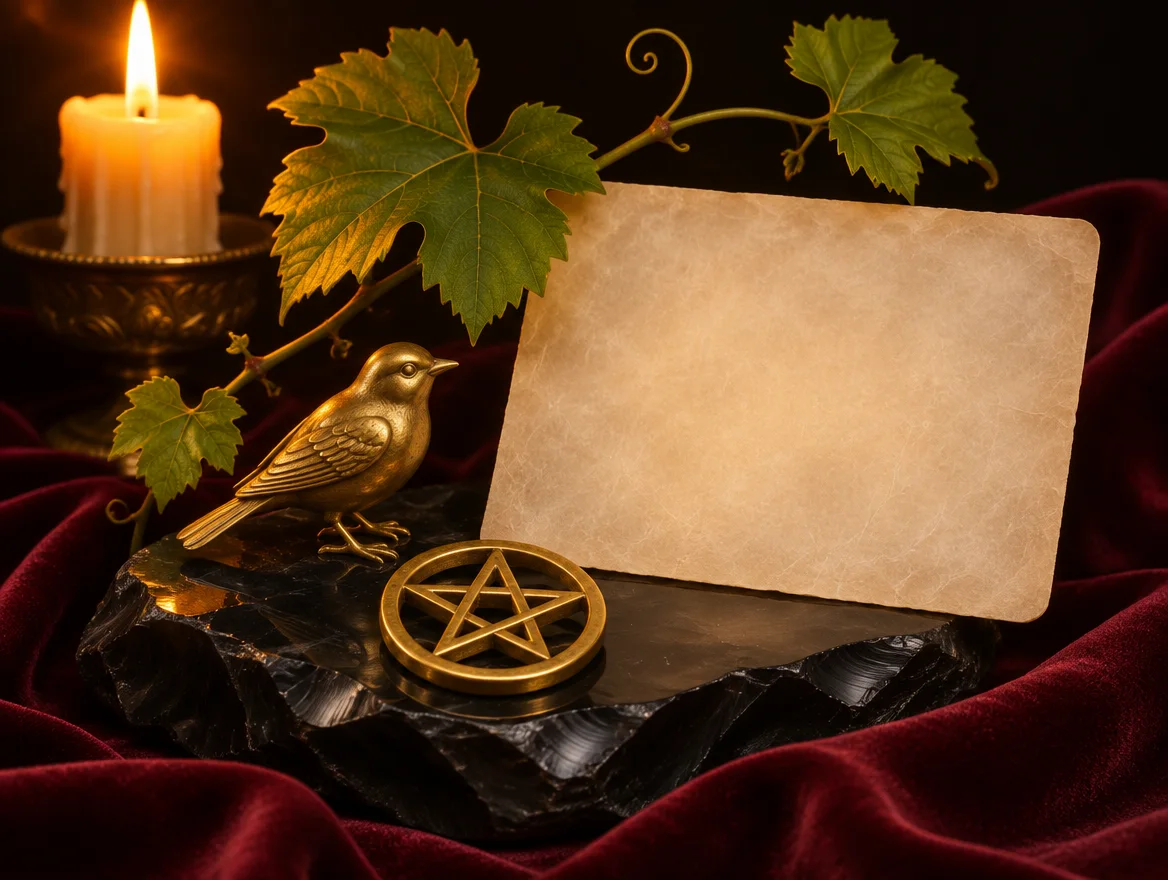
Your next step: take the garden walk above and choose your one open gate before you close the notebook. Then find where Venus falls in your own chart with our guide on how to read a birth chart: the planet of pleasure and enjoyment that the Golden Dawn tied to this card.
Explore Next
- Care for detail and its critical shadow: Virgo Personality Traits
- Venus at home in comfort: Taurus Personality Traits
- Your needs versus your pleasures: Moon vs Venus
- Where the earth suit begins: Ace of Pentacles
- Holding on too tightly: Four of Pentacles
- Reading by feel: Intuitive Tarot (Code of Ascension)
- New to the cards: Tarot for Beginners: How Tarot Really Works (Code of Ascension)
- More tarot on The 9th King: Tarot Card Meanings · Minor Arcana · Tarot & the Zodiac · Queen of Pentacles · Shadow Work Tarot Spread
- More cards in this set: Eight of Pentacles, Ten of Pentacles, Two of Pentacles, Nine of Cups
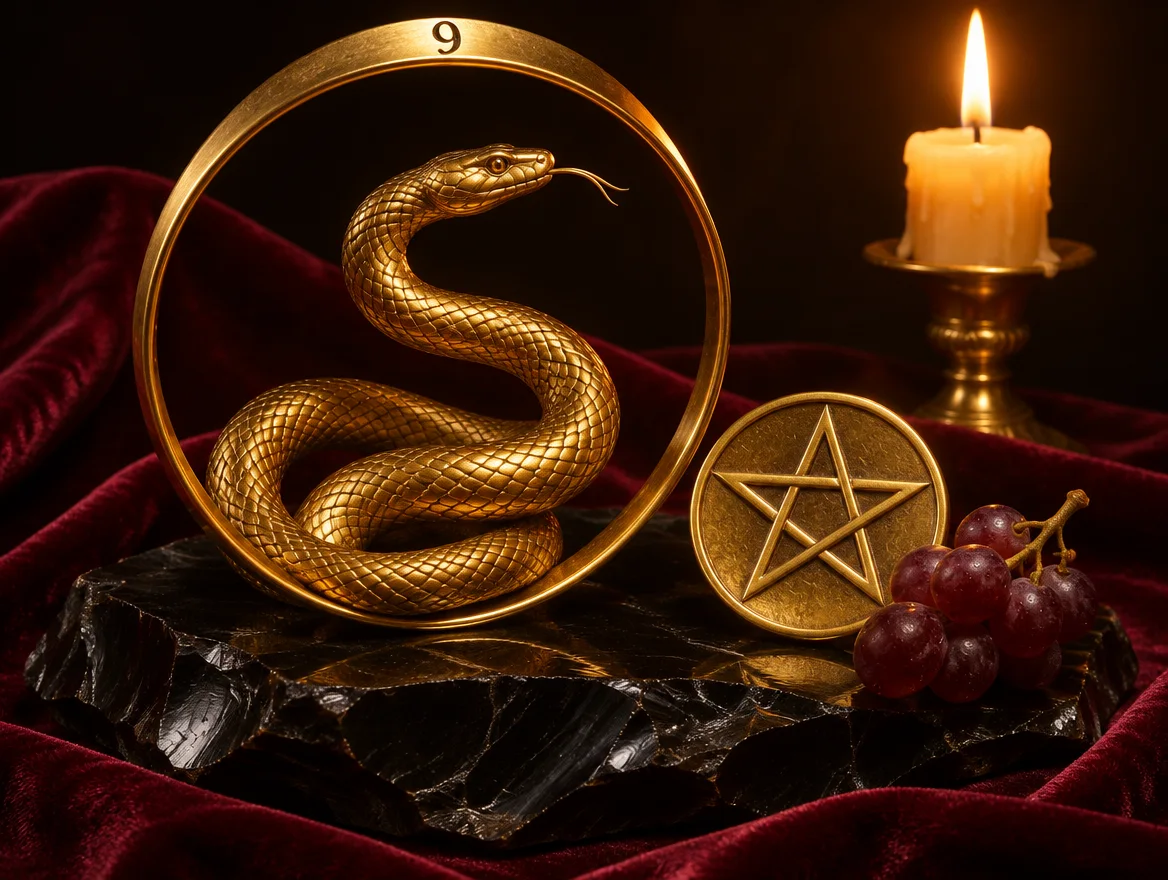
Final Thought: Tend Your Garden, Leave the Gate Open
The woman in the Nine of Pentacles isn’t proving anything. She’s at ease in what she’s tended. You can have that too, whatever you own: trust your judgment, care for what you’ve grown, enjoy it now, and let people in when you choose. Know your nature. Rule your life.
About the Author
King is the founder of The 9th King, where zodiac psychology, relationships and shadow work are explored as tools for self-knowledge rather than fortune-telling. He’s a Libra Sun, and writes about the personal side of astrology on King The Kemist. Astrology on The 9th King is interpretation and self-reflection, not prediction or established fact.
Leave a Reply